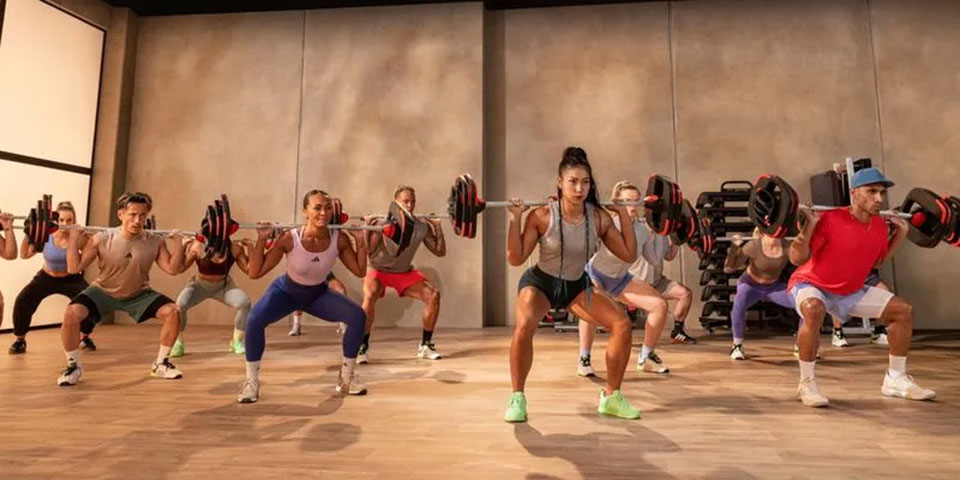
The Instructors
Julia Bausenwein – Fitness First, Munich, Germany
Atsushi Yamane – Studio TRIVE, Osaka, Japan
Ralf Schneider – POINT Sports Wellness Club, Gerlingen, and Fitness First, Stuttgart, Germany
Dan Maroun – Stephen’s Family YMCA, Champaign, USA
Jessica Schallock – Fellowship Fitness, Polson, USA
Megan Balsdon – Gold’s Gym, Austin, USA
What has it been like to teach BODYPUMP HEAVY and what challenges have you faced?
Julia: Coaching BODYPUMP HEAVY feels like a completely different kind of challenge – in the best possible way.
What I really love about the program is the strong focus on lifting technique. Most tracks are built as supersets with two exercises performed for eight repetitions across three rounds. That structure gives you real space to coach. The first rounds are ideal for establishing the basics and explaining the why, while the final round becomes the moment to motivate, intensify, and bring the room together.
Mentally, it is a different experience too. The music does not always have obvious peaks, like those found in the back track of BODYPUMP® for example. At the same time, it still offers strong anchors and moments of intensity – the highs are simply more subtle. This challenges you as an Instructor to build tension and presence from round one to round three, rather than relying on one big musical moment.
The longer rest periods are a real game-changer. They give members the confidence to truly commit to heavier loads, knowing recovery is built in. That is where real progress happens, both physically and mentally.
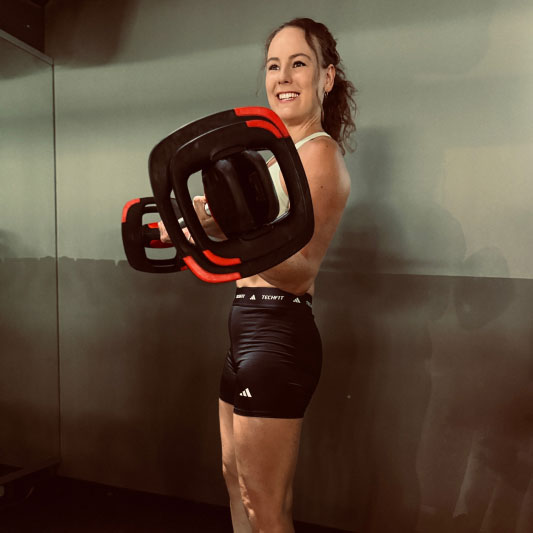
Julia Bausenwein
Atsuhi: Teaching feels very different from traditional classes – almost like delivering personal training in a group setting. Because I lift heavier weights myself, I shift from “follow me” to encouraging members to “focus on themselves.” The longer rest periods are moments for education and connection, offering anatomical cues and individualised feedback. The level of trust and connection with members is stronger than in a standard class.
“The music is back to co-teaching. It influences what I feel, what I say and how I say it.”
Ralf: After a superset, I celebrate my members’ efforts and share my own experience – showing how I struggle, fight, and enjoy lifting. It’s important to be a good role model and challenge myself alongside them. Physically, certain tracks are a challenge every time, but finishing them gives me a great feeling of success and confidence.
Jessica Schallock: It’s just about perfect physically. The cleans are always challenging, but eight reps makes the training doable. The order of the exercises is genius. I feel the fatigue at the end of each track, but not so fatigued that I can’t go heavy in the next one. Mentally, I love the slow tempo. The recovery periods go by so fast if you’re lifting heavy enough. I don’t have a problem staying mentally engaged throughout the workout. The work-to-recovery periods provide a lot of opportunity for connection, which I value.
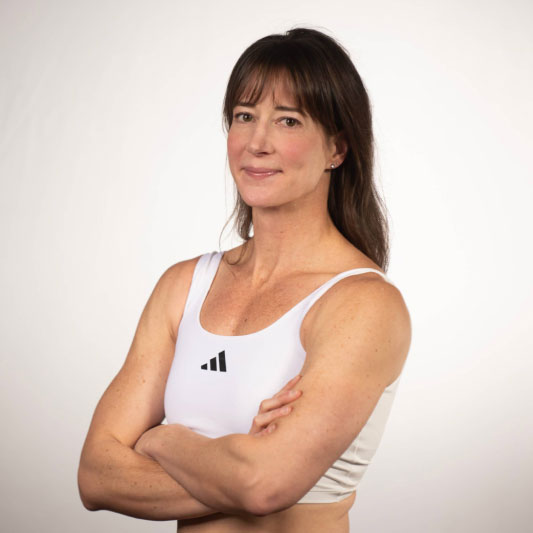
Jessica Schallock
Dan: Mentally, the biggest challenge is understanding the music differently. Veteran Instructors know the anatomy of a song, but in BODYPUMP HEAVY, you focus on when to work and when to recover. Being comfortable with the longer 8x8 recovery periods is key. You also need to convince members that three sets of eight reps are enough. Mentally, that can be the toughest part.
Megan: My class and I are definitely getting plenty sweaty in BODYPUMP HEAVY (lol). I front-load the science behind slower, heavier training in my class introduction, explaining that BODYPUMP HEAVY is similar to BODYPUMP in how we use music and tempos to help activate the muscles.
Within each track, I also encourage participants to continually evaluate the weights they’re using – lifting heavy enough that the recovery points are truly needed before starting the next block of work.
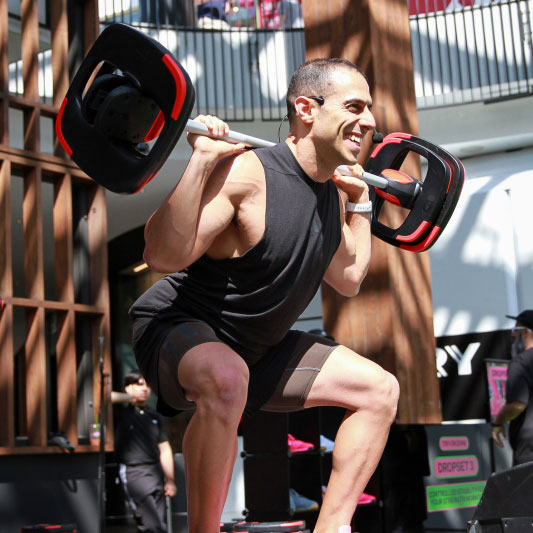
Dan Maroun
I had a few injuries and challenges before and after certification: arthritis everywhere, shoulder dislocations, rotator cuff surgeries, knee maintenance, heart flutter, and degenerative disc disease were the early medical battles. BODYCOMBAT was my baseline for recovery from two shoulder dislocations with subsequent rotator cuff surgeries and a cervical double discectomy. I always went back to class a couple of weeks early with a brace or sling, just to be around our members and stay in touch. I feel strong and confident as a BODYCOMBAT Instructor. I gained confidence in life by working hard at technique, connecting with members, and striving to be the best version of myself. I openly share my struggles and successes before, during, and after class. I always get back more experience, strength, and hope than I might give by listening to members’ stories. I let them know if they don’t believe in themselves, I do.
What has the response been like?
Atsuhi: Participation continues to climb week after week. About 70–80% of attendees are existing BODYPUMP fans, while 20–30% are new to group training. It’s clear members were genuinely looking for this challenge.
Megan: Some members were hesitant initially, fearing they couldn’t lift heavier weights. I explained that BODYPUMP HEAVY uses slower tempos and longer recovery periods, and encouraged them to start where they felt comfortable. After one or two classes, members realised they could lift heavier than they thought. Adaptation is quick once members experience the format.
“When you practise the program regularly yourself and teach it consistently, you quickly notice how much stronger you become.”
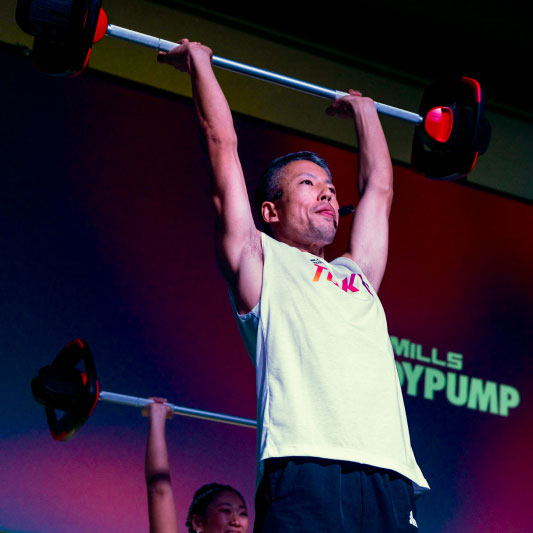
Atsuhi Yamane
Dan: The response has been very, very positive. My demographic is on average, 40+ years, so the response has been especially positive because the tempos are slow and controlled. I have noticed that my members do go heavier, especially when encouraged, and especially since they know we are doing an exercise three times. I see them add little by little.
A second area they love is the music. With BODYPUMP HEAVY, the music is back to co-teaching. It influences what I feel, what I say and how I say it.
How does teaching BODYPUMP HEAVY differ from BODYPUMP?
Ralf: I can be more relaxed and calm when I teach, because there is plenty of time to explain what is coming next and to change the weights, even if I don’t have the fabulous LES MILLS EQUIPMENT. The energy in the class is different because the music feels less dominant compared to BODYPUMP. I’m not the “rockstar,” but the “supporting coach” for my members.
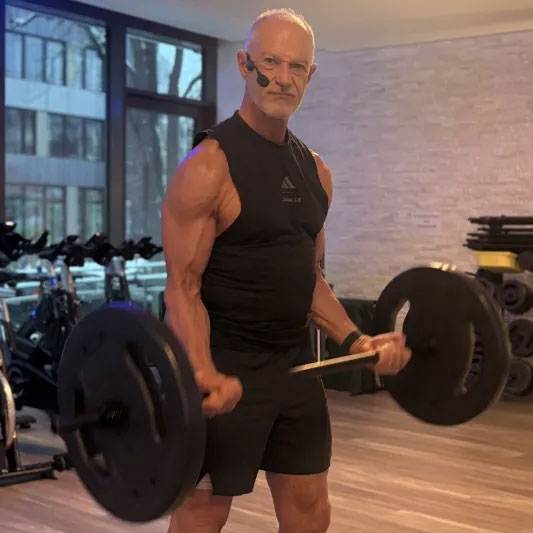
Ralf Schneider
Dan: The class feels different; heart rate isn’t as high as in BODYPUMP, except in Squats and Lunges. The trickiest part is planning recoveries – they need to have purpose. Members need to see that workouts don’t have to be 100% intensity for 55 minutes.
Julia: The focus is more on technique than following the Instructor. Each rep is deliberate, and coaching is built into the structure. The music has fewer obvious peaks, so building tension and presence is the Instructor’s responsibility.
Why should Instructors (new or existing) consider certifying in BODYPUMP HEAVY?
Julia: I actually think BODYPUMP HEAVY can be a great entry point, especially for people who enjoy strength training and love lifting weights.
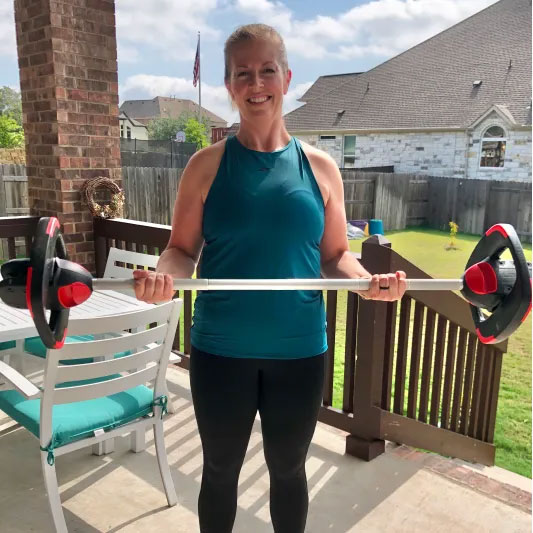
Megan Balsdon
You do not need to be the strongest person in the room. A solid base level of fitness helps, but what matters most is that you challenge yourself while still being able to coach well. Feeling the workout creates empathy, but your priority is always to observe, connect, and support your members.
What I also really like is that when you practise the program regularly yourself and teach it consistently, you quickly notice how much stronger you become. The structure, the rest periods, and the focus on progressive load make strength gains very tangible – for both Instructors and members.
For anyone who loves strength training and wants to help others build confidence with weights, BODYPUMP HEAVY is a powerful place to begin.
“It’s clear members were genuinely looking for this challenge.”
Atsuhi: I would recommend it. Because the format isn’t driven as strictly by the rhythm of the music, it is much easier to create an environment where Instructors can focus on form, technique, and coaching. This makes it an ideal program for developing the most important Instructor skill of all: the ability to observe participants.
For existing BODYPUMP Instructors, that deeper knowledge – understanding why a particular form matters – makes the cues in a regular BODYPUMP class far more convincing and effective. It is a skillset that supports longevity as an Instructor.